Education · Astronomy and astrophysics

Solar Physics Teaching

Courses and seminars in solar physics, astronomy, astrometry, and scientific data analysis. Explore the programs by academic year, with the most recent courses first.

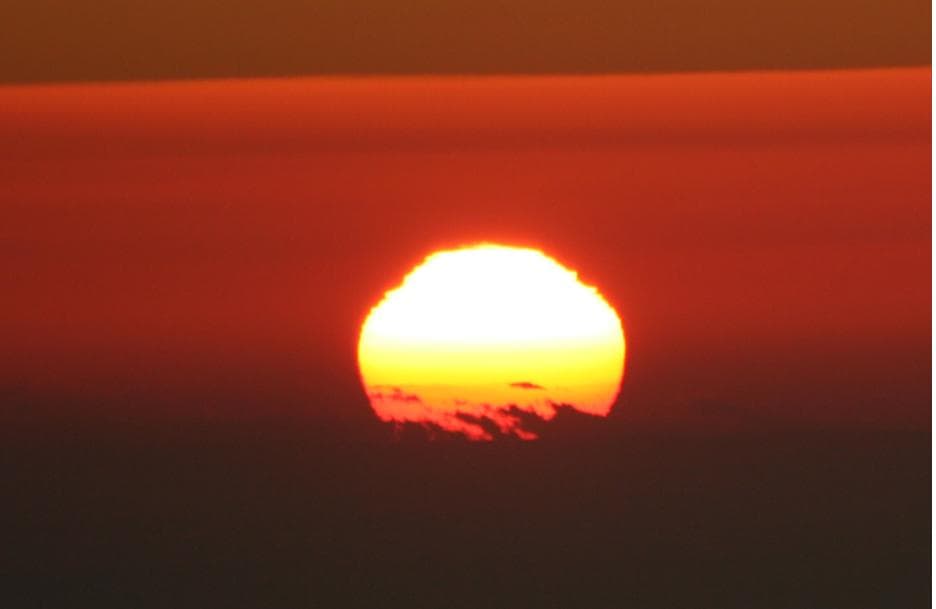
The Sun observed near the horizon
Observation
Teaching
By year

Academic year

2011–2012

Astrophysics Laboratory — Solar Physics

Sapienza University of Rome · Department of Physics

FIS/05 · Second semester

Methods for measuring the solar diameter from eclipses and meridian transits.

Reading and course materials· show
  • Egidio Landi Degl’Innocenti, Solar Physics (Springer, 2008)
  • Selected papers from international scientific journals

History of Astronomy

Pontifical Athenaeum Regina Apostolorum

FO2123 and SFO008 · First semester

A survey of astronomy from ancient civilizations through medieval and early modern science to physical cosmology, combining historical ideas with observation and measurement.

  • Egyptian and Chaldean astronomy; Archimedes and Hipparchus
  • Ptolemy, medieval Christian and Arab astronomy, and Gerbert d’Aurillac
  • Copernicus, Tycho Brahe, Kepler, Galileo, and the rise of national observatories
  • Astrometry in the Solar System and the Galaxy; physical cosmology

Field visits included Santa Maria degli Angeli, the Meridian of Augustus, St Peter’s Basilica, and the National Library. Practical work included meridian observations of the Sun and study of the celestial sphere.

Reading and course materials· show
  • La Sfera. Da Gerberto al Sacrobosco, edited by C. Sigismondi (UPRA, 2008)
  • Meridiani e Longitudini a Roma, edited by C. Sigismondi (Sapienza, 2006)
  • C. Sigismondi, Lo Gnomone Clementino (Rome, 2009)

Academic year

2010–2011

Philosophy of Astronomy

Pontifical Athenaeum Regina Apostolorum

FO2190 · First semester

The course traces how ideas about the structure of the universe changed from Ptolemy to modern cosmology, and how observation, theory, and cultural context shape scientific models.

  • Science and faith viewed through the practice of astronomy
  • Astronomy from ancient Egypt to Ptolemy
  • Astronomy, liturgy, and scientific instruments from Rome to Gerbert
  • Arabic and Christian astronomy through Copernicus
  • Galileo and his contemporaries
  • Stars and the changing models of the universe
  • Astrometry at Santa Maria degli Angeli
Reading and course materials· show
  • C. Sigismondi, Salvare i fenomeni: il pensiero moderno dell’astronomia antica (APRA, 2010)
  • C. Sigismondi, L’Astronomia nei Vangeli (APRA, 2010)
  • Lecture notes prepared for the course

Academic year

2008–2009

The Earth in the Solar System

Sapienza University of Rome · Geography

GEO/04 · Course code 105953 · First semester

An observational study of the Sun, Earth, and Moon, connecting classical models of the Solar System with modern measurements and dynamics.

  • Ptolemaic, Copernican, and Keplerian solar models
  • Precession, nutation, and long-term changes in Earth’s axial tilt
  • Solar observations and diameter measurements from transits and eclipses
  • The Moon, tides, and the long-term evolution of the Earth–Moon system
  • Solar System dynamics and stability

Wednesday lectures met at Santa Maria degli Angeli; Friday sessions took place in the Geography map library. The semester began on 29 October 2008.

Reading and course materials· show
  • C. Sigismondi, Effemeridi (UPRA, 2008)
  • C. Sigismondi, Meridiani e Longitudini a Roma (Sapienza, 2006)
  • Lecture notes prepared for the course

Philosophy of Astronomy

Pontifical Athenaeum Regina Apostolorum

Special course for the International Year of Astronomy 2009 · First semester

A study of the Copernican and Alexandrian revolutions and the development of astronomical knowledge, from classical cosmography to modern astrophysics and cosmology.

  • The role of measurement, models, and prediction in astronomy
  • How quantum and relativistic physics broadened the scope of astronomy
  • The telescope and the changing relationship between ancient and modern ideas
Reading and course materials· show
  • Thomas S. Kuhn, The Copernican Revolution
  • Lucio Russo, Flussi e riflussi
  • Pierre Duhem, Le Système du Monde
  • C. Sigismondi, La Sfera da Gerberto al Sacrobosco
  • Theodore S. Jacobsen, Planetary Systems from the Ancient Greeks to Kepler
  • C. Sigismondi (ed.), CVLMINA ROMVLEA

Academic year

2007–2008

The Earth in the Solar System

Sapienza University of Rome

GEO/04 · 4 CFU · Course code 105953

The course used the Clementine Gnomon at Santa Maria degli Angeli to connect Earth-motion theory with direct observation. A second theme linked astronomy and geography through tides and long waves.

  • Earth’s motions: precession, nutation, and variation of the ecliptic
  • The Clementine Meridian and observational tests of Solar System models
  • Eclipses, ephemerides, and gravitation from Newton to Einstein
  • Ocean tides, long waves, tsunamis, and the Earth–Moon system

Wednesday sessions ran from 11:00 to 13:00 at the Basilica of Santa Maria degli Angeli, beginning 10 October 2007.

Reading and course materials· show
  • M. Catamo and C. Lucarini, Il Cielo in Basilica (2002)
  • J. Heilbron, The Sun in the Church (2005)
  • C. Sigismondi, Meridiani e Longitudini a Roma (2006)
  • C. Sigismondi, Long Waves Perturbations to Astronomical Tides in Adriatic and Tyrrhenian Sea (2007)
  • M. Tomczak, Shelf and Coastal Oceanography (1998)
  • W. Bascom, Onde e Spiagge (1981)
  • F. Stravisi, Fisica dell’Oceano (course notes, 1977 and 2007)

Field and measurement laboratories

Rome · in collaboration with Mario Aversa

New edition · June 2008 · 50 hours of observation and data analysis

Small-group practical projects connected astronomical observation with field measurement. Each activity was limited to five students.

  • Oceanography: seiches in the Tyrrhenian Sea
  • Geodesy: GPS altimetry
  • Astrometry: solstice survey of the meridian and solar diameter measurements
  • Archaeoastronomy: measurements at Castrum Inui, Cori, and Palestrina

Academic year

2006–2007

Astronomy, geography, and the Solar System

Course program

Geography and classical cartography

A broad program connecting the history of measurement with the structure and dynamics of the Solar System.

  • Eratosthenes and measurements of Earth and Sun; Archimedes and the solar diameter; Aristarchus and Solar System scale
  • Longitude by sextant, lunar occultations, and GPS
  • Astrometric and cartographic expeditions, eclipses, and occultations
  • The planets, the Sun, climate change, Earth’s rotation, and timekeeping

Seminars and specialist courses

Additional teaching programs

Programs across astronomy, the history of science, and quantitative methods.

Master’s program · Science and Faith

History of Astronomy

A study of astronomical ideas and instruments from Egypt and Babylon through Hipparchus, Ptolemy, Gerbert, Copernicus, Kepler, Galileo, Cassini, and Newton. The course paired historical texts with quantitative analysis and observations.

ING-INF/05 · 2 CFU

Statistical Data Analysis Laboratory

Students built simulated data sets and used Excel and Monte Carlo methods to explore experimental errors, distributions, descriptive statistics, least-squares fitting, hypothesis tests, and time-series analysis.

Astronomy PhD course · FIS/05

Astrometry with the Clementine Gnomon

A practical program in precision measurement at Santa Maria degli Angeli, covering solar transits, the solar diameter, refraction, parallax, ephemerides, Earth’s rotation, and the measurement limits of a pinhole instrument.

Master’s seminar

Women in Astronomy

A five-session seminar on astronomers and their contributions, including Carolina Herschel, Maria Mitchell, Henrietta Leavitt, Dorrit Hoffleit, Jocelyn Bell, Wendy Freedman, Kate Spence, Janet Mattei, and Margherita Hack.
Explore solar research

Visit the laboratory page for research themes, student projects, and publications.

Solar Physics Laboratory